



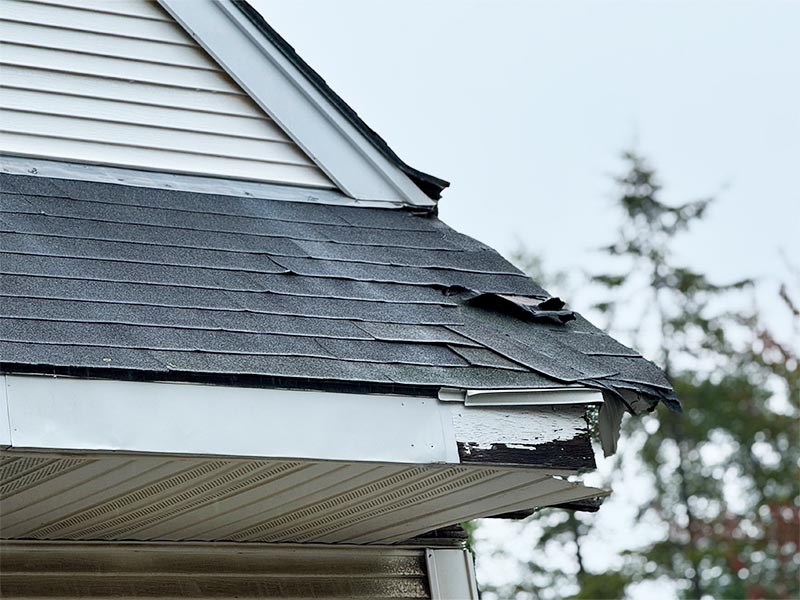
Maryland storms can be rough on your roof. Between heavy spring rains, summer thunderstorms, and the occasional nor’easter, it’s no surprise that roofs end up damaged.
The tricky part is that storm damage isn’t always easy to spot. A missing shingle or damaged flashing may not cause a leak right away, but it can eventually lead to bigger and more expensive problems. Knowing what to look for after a storm can help you catch damage early and avoid costly repairs.
Here’s how to check for common signs of storm damage, both outside and inside your home, and what to do if you find something that doesn’t look right.
Start With a Walk Around Your Home
You don’t have to climb onto your roof to spot signs of damage. After a heavy storm, take a slow walk around your property and look for these common warning signs.
Missing or Damaged Shingles
Strong winds can loosen or tear shingles off your roof. Look for bare spots, shingles that are curling or lifting, or pieces of shingles in your yard or gutters. Even one missing shingle can let water get underneath your roof and cause damage over time.
Granules in Your Gutters
Asphalt shingles have a layer of small granules that help protect them from the sun and weather. After a storm, check your gutters and the ground near your downspouts. If you notice a lot of dark, sand-like material, your shingles may have lost some of their protective coating.
A little granule loss is normal as roofs age, but a large amount after one storm could mean your roof was damaged by hail or heavy weather.
Dented Gutters or Downspouts
Hail often leaves dents in gutters, downspouts, and other metal surfaces around your home. If your gutters have fresh dents, your roof likely took the same impact. Even if you can’t see roof damage from the ground, it’s a good idea to have it inspected after a hailstorm.
Look for Damage on the Roof
If you can safely see your roof from an upstairs window or another safe location, take a closer look. Never climb onto a damaged or wet roof yourself.
Damaged Flashing
Flashing is the metal around chimneys, vents, skylights, and other roof openings. Storms can loosen or bend it, creating gaps where water can get inside. Damaged flashing is one of the most common causes of roof leaks after a storm.
Cracked or Bruised Shingles
Hail can leave small cracks or soft spots on shingles that aren’t always easy to see. Even if the damage looks minor, those weak spots can get worse every time it rains. If your area had hail, it’s worth having your roof checked by a professional.
Branches and Other Debris
Leaves, branches, and other debris can trap moisture on your roof and clog your gutters. Over time, that extra moisture can wear down your shingles and lead to mold or water damage. Remove debris when it’s safe to do so.
Don’t Forget to Check Inside
Sometimes the first signs of roof damage show up inside your home. After a major storm, take a few minutes to check your attic and the rooms directly below your roof.
Water Stains or Damp Spots in the Attic
Look for dark stains on the wood, damp insulation, or any signs of dripping water. Even small stains can mean water is getting through your roof.
Ceiling Stains or Peeling Paint
Brown water stains, bubbling paint, or soft spots on your ceiling or walls are all signs that water has made its way inside. If you notice any of these, don’t ignore them. The longer a leak continues, the greater the chance of mold and more serious damage.
What to Do If You Find Storm Damage
If you notice any of these warning signs, here’s what to do next:
- Take photos. Document any damage you see inside and outside your home. Photos can be helpful if you need to file an insurance claim.
- Don’t wait. Many homeowners insurance policies have deadlines for reporting storm damage. Waiting too long could affect your claim.
- Schedule a professional roof inspection. A roofing expert can find damage that isn’t visible from the ground and recommend the right repairs.
- Choose a trusted local contractor. Be cautious of contractors who go door-to-door after a storm. Work with a licensed, local roofing company with a solid reputation.
A Free Inspection Is the Best Place to Start
Not all storm damage is easy to see, but it almost always gets worse if it’s left alone. What starts as a loose shingle or a small gap around flashing can eventually turn into a roof leak or more extensive repairs.
AC Matthews Roofing & Exteriors offers free storm damage inspections throughout Maryland and Southern Pennsylvania. We’ll carefully inspect your roof, explain what we find, and let you know if any repairs are needed. There’s no obligation and no high-pressure sales pitch.
If your home has recently been through a major storm, don’t wait until you see water dripping from your ceiling. Contact AC Matthews Roofing & Exteriors today to schedule your free inspection.