Winter weather in Maryland may vary from year to year, but snow and ice consistently pose risks to residential roofing systems. Even moderate snowfall or brief ice events can expose hidden vulnerabilities in a roof, leading to leaks, insulation damage, and costly repairs if problems aren’t addressed promptly. Because Maryland experiences frequent freeze-thaw cycles, homeowners often discover roof damage weeks after the snow has melted.
AC Matthews is here to help you identify winter-related roof damage early and implement solutions that prevent recurring issues. Keep reading to understand how snow and ice affect your roof and know when to call a professional roofing contractor.
How Snow and Ice Affect Residential Roofs in Maryland
Maryland’s winter climate creates unique challenges for homeowners. Unlike regions with consistently cold temperatures, Maryland often shifts between freezing and above-freezing conditions throughout the winter. This repeated temperature fluctuation accelerates wear on roofing materials.
When snow accumulates on a roof, it adds weight and stress to the roofing system. While properly built roofs are designed to handle these types of snow loads, existing weaknesses—such as aging shingles, deteriorated flashing, or poor attic insulation—can quickly become problematic. As snow melts during warmer daytime temperatures, water flows down the roof surface. And when temperatures drop again overnight, that water refreezes and expands.
This expansion forces moisture into small cracks, seams, and nail penetrations. Over time, the freeze-thaw cycle loosens shingles, weakens sealants, and compromises the roof’s ability to keep water out. Homes with complex rooflines, valleys, or older construction are especially vulnerable to this type of damage.
Common Types of Snow and Ice Roof Damage
Winter-related roof damage can affect multiple components of your home’s roofing system. Some issues are easy to spot, while others remain hidden until interior damage appears.
Shingle Damage
Shingle damage is one of the most common problems. Ice can lift shingles, break adhesive seals, and cause cracking or granule loss. Once shingles are damaged, water can easily penetrate the roof.
Flashing Damage
Flashing damage is another frequent issue. Flashing around chimneys, skylights, and roof vents is particularly vulnerable to ice expansion. When flashing bends or separates, it creates direct pathways for water to enter your home.
Gutter Damage
Gutter damage also plays a major role in winter roof problems. Ice buildup can pull gutters away from the fascia, block downspouts, and prevent proper drainage. When water can’t drain away from the roof, it often backs up under shingles or spills over onto siding and foundations.
Left unaddressed, these issues can lead to insulation damage, wood rot, mold growth, and interior water stains.
Why Ice Dams Are a Serious Problem for Maryland Homes
Ice dams are one of the most destructive winter roofing issues. They form when warm air escapes from inside your home, melting snow on the roof. As that melted snow flows downward and reaches colder roof edges, it refreezes and forms a dam of ice.
Once an ice dam forms, additional melting snow has nowhere to go. Water backs up behind the ice dam and is forced underneath shingles and into the roof structure. This can lead to ceiling stains, warped drywall, damaged insulation, and even mold growth inside your home.
Ice dams are especially common in homes with inadequate attic insulation or poor ventilation. While removing visible ice may seem like a solution, it doesn’t address the underlying causes. Attempting to break ice dams off your roof also poses serious safety risks and can lead to further roof damage, which is why it’s best to avoid the area underneath an ice dam and call a roofing contractor for professional removal.
AC Matthews is always ready to help address roof concerns and evaluate roof damage to help you resolve ice dam problems safely and effectively.
Signs Your Roof May Have Snow or Ice Damage
Roof damage caused by snow and ice is not always immediately obvious. Many homeowners assume their roof is fine once the snow melts, only to discover problems later. Recognizing the early warning signs can help you take action before minor issues turn into costly repairs.
Common Interior Warning Signs
Damage caused by snow and ice often shows up inside the home first. Watch for:
- Water stains on ceilings or walls
- Peeling or bubbling paint
- Damp or compressed insulation
- Musty odors in attics or upper-level rooms
- Mold or mildew growth near ceilings or vents
These symptoms may appear days or even weeks after winter weather has passed, especially after snow begins to melt.
Common Exterior Warning Signs
Exterior roof damage may be visible from the ground or during a routine walkthrough of your property. Common signs include:
- Missing, cracked, or lifted shingles
- Damaged or loose flashing around chimneys, vents, or skylights
- Sagging areas along the roofline
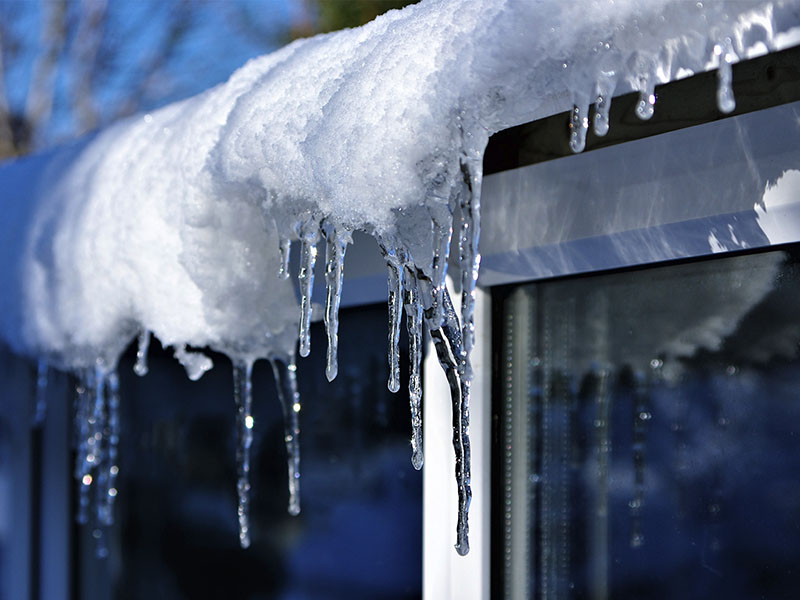
- Excessive icicles forming along the roof edges or gutters
- Gutters pulling away from the fascia or clogged with ice
While icicles may look harmless, they often indicate heat loss and poor drainage—both major contributors to ice dam formation.
If you notice any of these warning signs, scheduling a professional roof inspection can help determine whether snow or ice damage is present and what repairs may be needed to protect your home.
When to Call a Roofing Contractor After Snow or Ice
Not all winter roof issues can wait until spring. Certain types of snow and ice damage require immediate attention from a qualified roofing contractor to prevent further deterioration and costly repairs.
Active Roof Leaks Require Immediate Attention
Active roof leaks are the most urgent sign that professional roofing help is needed. Even small leaks can quickly lead to damaged insulation, stained ceilings, warped drywall, and compromised electrical systems. Left unaddressed, moisture intrusion can also promote mold growth and wood rot. Prompt repairs from a roofing contractor help stop the leak at its source and protect your home’s interior from further damage.
Signs of Structural Stress Should Never Be Ignored
Heavy snow accumulation places significant strain on roof framing and decking. If your roof is already weakened, that added weight can lead to structural movement. Warning signs include sagging roof areas, unusual cracking or popping sounds, and doors or windows that suddenly become difficult to open or close. These symptoms may indicate structural stress and should be evaluated immediately by a professional roofer.
Ice Buildup That Causes Water Backup
When water drainage is blocked by ice buildup along your roof’s edges and inside your gutters, it increases the risk of leaks and ice dam damage. Attempting to remove ice without proper tools or training can be dangerous and may damage roofing materials. Professional roofing contractors have the experience and equipment needed to safely address ice-related issues without causing additional harm to your roof.
If you experience any of these conditions after snow or ice events, contacting AC Matthews promptly can help prevent minor issues from turning into major repairs.
Why DIY Winter Roof Repairs Can Make Problems Worse
After a winter storm, some homeowners consider making temporary or do-it-yourself roof repairs. While this may seem like a quick fix, it often leads to more extensive damage and higher repair costs over time.
Walking on snow-covered or icy roofs, for example, is extremely dangerous. Slips and falls are common during winter, and roofing surfaces become unpredictable when frozen.
Improper repairs can also void roofing warranties and complicate insurance claims. Using incorrect materials or sealants may provide short-term relief, but they often fail during the next freeze-thaw cycle.
Professional roofing contractors like AC Matthews understand how winter conditions affect different roofing materials. Our roofers also use industry-approved repair methods designed to withstand Maryland’s climate, ensuring repairs are safe, effective, and long-lasting.
Preventing Future Snow and Ice Roof Damage
Preventive maintenance is one of the most effective ways to reduce the risk of winter roof damage. Taking proactive steps before and after winter not only helps prevent leaks and ice dams but can also extend the overall lifespan of your roof.
Improve Attic Insulation and Ventilation
Proper attic insulation and ventilation are essential for maintaining consistent roof temperatures during winter.
A professional roof evaluation can identify:
- Areas where heat is escaping from the home
- Inadequate or blocked ventilation pathways
- Insulation that is compressed, damp, or insufficient
Correcting these issues helps reduce snow melt on your roof and limits the impact of freeze-thaw cycles that lead to winter roof damage.
Schedule Routine Roof Inspections
Routine roof inspections allow small problems to be identified and repaired before they worsen during winter weather. Addressing minor issues early is far more cost-effective than emergency repairs after snow or ice damage occurs.
A seasonal roof inspection can help catch:
- Loose, cracked, or aging shingles
- Deteriorating or damaged flashing
- Early signs of moisture intrusion
- Weak points around chimneys, vents, and roof valleys
Inspections are especially valuable in the fall and again after winter to assess any damage caused by snow and ice.
Maintain Gutters and Roof Drainage Systems
Gutters play a critical role in directing melting snow and ice away from your roof. When gutters are clogged or damaged, water can back up under shingles or refreeze along roof edges.
Preventive gutter maintenance includes:
- Removing leaves and debris before winter
- Ensuring downspouts are clear and properly aligned
- Repairing loose or sagging gutter sections
- Checking for signs of ice-related damage
To minimize the accumulation of gutter debris, you may want to consider upgrading your gutter system to include gutter guards. These guards are effective and can significantly simplify gutter maintenance.
Consider Roofing Material Upgrades
In some cases, investing in a roof replacement with upgraded roofing materials may provide added protection against winter weather. Older roofs or materials nearing the end of their lifespan are more vulnerable to snow and ice damage.
Upgrades that may improve winter performance include:
- High-quality, weather-resistant shingles
- Improved underlayment for added moisture protection
- Reinforced flashing systems at roof penetrations and valleys
These improvements can strengthen your roof’s ability to withstand Maryland’s winter conditions.
Protect Your Home from Winter Roof Damage With AC Matthews
Snow and ice can quietly compromise your roof long after winter weather has passed, which is why timely evaluation and professional repairs are essential to protecting your home. Addressing winter roof damage isn’t just about fixing what you can see—it requires understanding how moisture, insulation, ventilation, and exterior components work together to keep your home secure.
At AC Matthews, we take a comprehensive approach to every project. We start with detailed roof inspections to identify both visible and hidden damage, then use proven roof repair methods and safety-focused practices to resolve current issues while reducing the risk of future problems. Our experience serving local homeowners allows us to tailor solutions to your home’s specific needs and communicate clearly throughout the process.
If you suspect snow or ice-related roof damage—or want to make sure your home is prepared for future weather—we’re here to help. Contact AC Matthews today and schedule your next roofing or exterior service.