



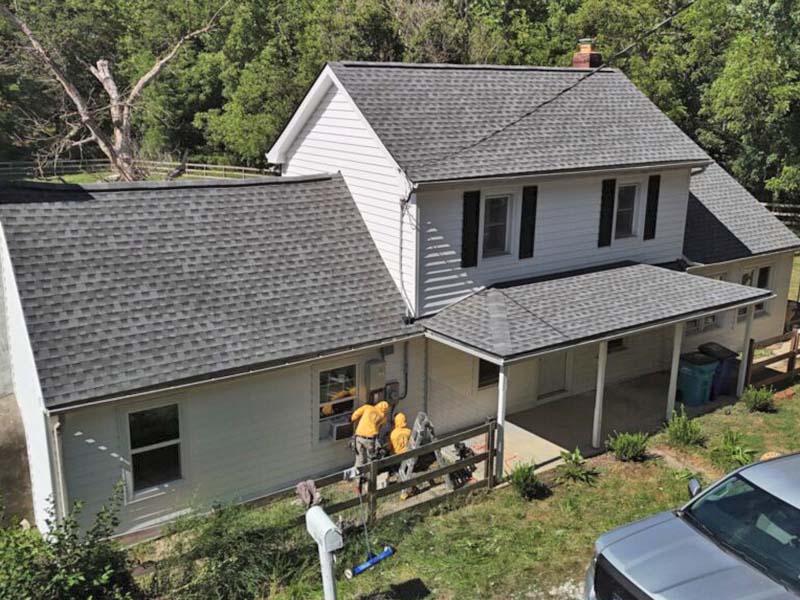
If you’re constantly adjusting your thermostat but still struggling to stay warm, the problem may extend beyond your heating system. Your exterior walls influence how quickly heat moves into and out of your home, making insulation an important consideration when addressing indoor comfort.
This was the motivation behind one of our siding and insulation renovation projects at AC Matthews Roofing & Exteriors. Our customer was tired of repeatedly adjusting the thermostat to stay comfortable and wanted to address the problem through exterior improvements.
By incorporating insulation into a siding renovation, you can explore ways to improve your home’s thermal performance while updating its appearance.
When Indoor Comfort Drives a Siding Renovation
For this renovation, replacing the siding was about more than updating the home’s exterior. The project combined siding and insulation improvements with the goal of creating a more comfortable indoor environment.
Your heating system can produce warm air, but it can’t stop heat from moving through inadequately insulated walls. During winter, heat naturally moves toward the colder outdoors. In summer, the opposite occurs as outdoor heat moves toward your cooler interior.
Insulation helps slow this process, reducing the rate at which heat transfers through your walls. If you’re already considering siding replacement, addressing insulation during the same renovation may help you get more functional value from your exterior improvements.
Why Siding Replacement Is the Right Time to Evaluate Insulation
Your existing siding covers portions of the exterior wall assembly that aren’t normally accessible. Removing the siding creates an opportunity to evaluate the underlying materials and consider whether additional insulation would benefit your home.
Planning these improvements together also helps you avoid installing new siding only to discover later that addressing your insulation requires disturbing recently completed work.
Several factors influence whether you should incorporate insulation into your siding replacement:
- Existing wall construction and insulation
- Condition of underlying wall materials
- Local climate and seasonal temperatures
- Moisture management requirements
- Renovation budget
Not every siding replacement requires additional insulation. Understanding your home’s existing construction helps you determine which improvements are worth including before installation begins.
How Siding and Insulation Work Together to Improve Energy Efficiency
Energy-efficient siding upgrades involve more than selecting a new exterior finish. Siding and insulation serve distinct functions within your wall assembly, and understanding these differences can help you make better decisions about your renovation.
Siding Provides Exterior Weather Protection
Your siding helps shield the underlying wall assembly from outdoor conditions while shaping your home’s appearance. When installed alongside appropriate weather-resistant barriers and flashing, it helps direct rainwater away from vulnerable materials.
Replacing deteriorated siding can restore this exterior protection. However, new siding alone doesn’t necessarily provide a substantial increase in your home’s thermal resistance.
Insulation Reduces Heat Transfer Through Exterior Walls
Traditional framed walls often contain insulation between individual framing members. Although this insulation helps resist heat flow, the framing itself can create pathways where heat moves more easily, a process known as thermal bridging.
Depending on your home’s construction, continuous exterior insulation can provide an additional layer of thermal resistance across the framing and insulated cavities. This can help reduce thermal bridging and limit heat movement through your exterior walls.
During winter, better-insulated walls can help retain indoor warmth and maintain more comfortable interior wall temperatures. In summer, they can help reduce heat gain from outside, supporting your home’s cooling system.
Insulation isn’t the same as air sealing, however. If drafts contribute to your discomfort, addressing unwanted air movement may also be necessary.
Signs Your Home May Benefit From Insulation Upgrades
Frequent thermostat adjustments, like those experienced by our customer, can indicate that your home has difficulty maintaining comfortable temperatures. Paying attention to where and when discomfort occurs can help narrow down which areas deserve further evaluation.
You may want to discuss insulation improvements with your exterior contractor if you notice:
- Rooms that are consistently colder or warmer than others
- Interior wall surfaces that feel unusually cold in winter
- Drafts near exterior walls
- Difficulty maintaining your preferred indoor temperature
- Known gaps or deficiencies in existing wall insulation
These symptoms don’t automatically mean your exterior walls are responsible. Inadequate attic insulation, inefficient HVAC equipment, ductwork problems, and air leakage around windows or doors can produce similar conditions.
Before committing to insulation upgrades, it’s worth considering how these different parts of your home contribute to indoor comfort. Identifying the underlying issue helps you direct your renovation budget toward improvements that address your concerns.
Why Proper Installation and Moisture Management Matter
Improving your home’s thermal performance shouldn’t interfere with its ability to manage moisture. Adding exterior insulation changes the wall assembly, so the installation needs to account for how water, air, and water vapor move through the structure.
Integrating Insulation With Weather Protection
Your exterior walls must be able to manage rainwater and dry appropriately when moisture is present. The insulation, weather-resistant barrier, flashing, and siding need to work together to support these functions.
When comparing insulation options, you’ll likely encounter R-value, which measures a material’s resistance to heat flow. Although a higher R-value indicates greater thermal resistance, selecting insulation based on this measurement alone doesn’t account for moisture management or compatibility with your existing walls.
Protecting Windows, Doors, and Exterior Openings
Adding exterior insulation may increase the thickness of your wall assembly, affecting how siding and trim fit around windows, doors, and other openings. These transitions require careful attention because they interrupt the layers protecting your home from the weather.
Proper flashing and drainage details help direct water away from vulnerable areas. Before installation begins, discuss how your contractor plans to integrate these components so you understand how the renovation will protect your home as well as improve its thermal performance.
Balancing Energy Efficiency and Curb Appeal
While insulation contributes to the performance of your exterior walls, siding determines much of what you see from the street. An energy-focused renovation doesn’t mean you have to compromise on the appearance of your home.
When selecting new siding, consider design elements such as:
- Color: Choose a finish that complements your roofing and existing exterior features.
- Profile: Select a siding style that suits your home’s architecture.
- Texture: Consider how smooth or textured finishes affect the overall appearance.
- Trim: Use complementary details to define windows, doors, and architectural features.
If you’re making a significant investment in your exterior, it’s worth considering how these elements will look together rather than selecting each one individually. A cohesive design can give your home a refreshed appearance while allowing the insulation improvements to remain concealed behind the finished siding.
When to Consider a Full Exterior Renovation
Sometimes, improving your exterior walls is only part of addressing your home’s comfort concerns. If your windows or doors are aging, damaged, or poorly sealed, they may contribute to heat loss and drafts independently of your wall insulation.
When several exterior components are approaching replacement, a full exterior renovation can help you coordinate related improvements. For example, replacing aging windows during a siding renovation provides an opportunity to integrate window flashing and trim with the updated wall assembly.
However, expanding your renovation isn’t always necessary. If your windows, doors, and other exterior components remain in good condition, you can focus your investment on the areas that need attention without replacing materials that are still performing well.
What to Expect From Energy-Efficient Siding Upgrades
When you’re investing in insulation improvements, it’s natural to wonder how much difference they’ll make. Although exterior insulation can increase the thermal resistance of your walls, the extent of any improvement depends on your home’s existing construction and overall energy performance.
Heating and cooling costs are influenced by several factors, including outdoor temperatures, HVAC efficiency, thermostat settings, household habits, and utility rates. As a result, insulation upgrades alone can’t guarantee a specific reduction in your monthly energy bills.
Comfort is another valuable way to assess the benefits of your renovation. Depending on the conditions you’re addressing, you may experience more consistent temperatures throughout your home, fewer noticeably cold wall surfaces, or less need to adjust the thermostat.
Discussing these goals before your renovation begins helps you understand what insulation improvements can realistically accomplish and whether additional work may be necessary.
Improve Your Home’s Comfort With Energy-Efficient Siding Upgrades
If your home struggles to maintain comfortable temperatures, evaluating what’s behind your siding could be just as valuable as choosing the new exterior finish. Our team at AC Matthews Roofing & Exteriors can discuss your comfort concerns and exterior renovation options to help you determine which improvements make sense for your home.
Whether you’re planning a siding replacement or looking to address recurring temperature inconsistencies, we’re here to help. Contact AC Matthews Roofing & Exteriors today to discuss your siding and insulation renovation.